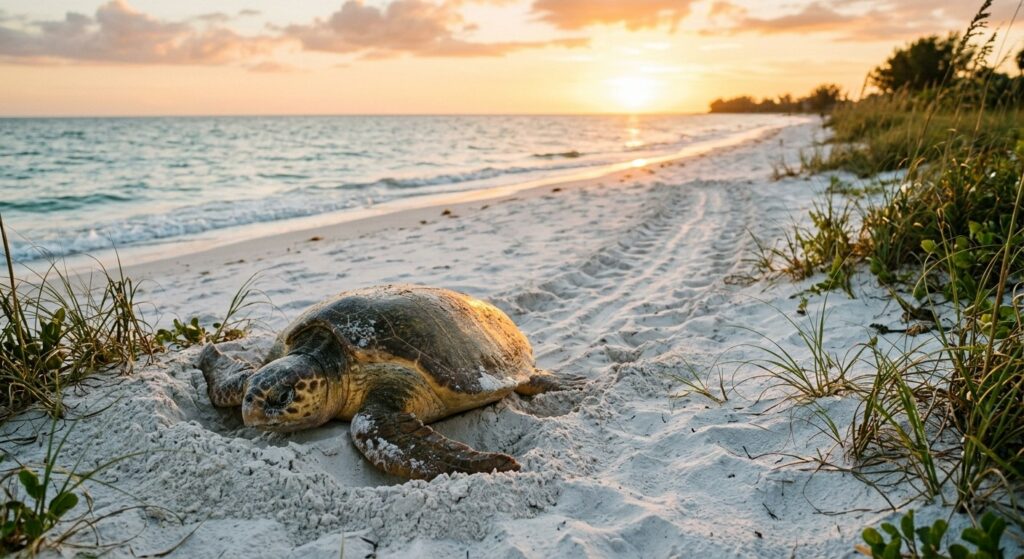
Every summer, something remarkable happens on the beaches of Anna Maria Island. Sea turtles that have traveled hundreds of miles return to the same shoreline where they hatched, crawl up through the surf in the dark, and lay their eggs in the sand.
Most visitors never realize it happens just a short distance from where they enjoy the beach. The ones who do, and who understand how to move carefully around it, walk away with a memory that lasts far beyond a typical beach vacation.
Sea turtle nesting season on Anna Maria Island runs from May through October and overlaps with peak vacation season. Loggerhead turtles return to nest on these beaches every year, and hatchings are visible, trackable, and genuinely unforgettable. Knowing the rules before you arrive helps you protect the turtles while getting the most out of your stay.
Sea Turtle Nesting Season on AMI Looks Like This Up Close
Loggerhead sea turtles are the most common species nesting on Anna Maria Island, and they are easy to recognize. They are large animals, and when they come ashore at night, they leave clear tracks in the sand.
Every morning during nesting season, a volunteer patrol walks the beach before the crowds arrive. They follow the overnight tracks, locate each nest, and mark it with four wooden stakes and a red ribbon.
The stakes go in tight, about six feet around the nest. A tag records the date the eggs were laid and the projected hatch window. The data becomes part of the scientific record. The nests are visible, clearly marked, and easy to spot. Visitors are encouraged to admire them from a respectful distance.
The Anna Maria Island Turtle Watch and Shorebird Monitoring program coordinates this work every season. They document each nest and share hatch projections publicly so visitors can follow along in real time.
Anna Maria Island’s Turtle Protection Rules Exist for Good Reason
Anna Maria Island takes sea turtle protection seriously. The light ordinance is one example. Turtles navigate by moonlight, and artificial light near the beach can disorient them, drawing hatchlings inland rather than toward the water. Homes and rentals within sight of the Gulf are required to use specific light colors during nesting season.
Beach equipment rules are equally important. Canopies, chairs, umbrellas, and wagons must be removed from the beach overnight so nesting turtles and hatchlings have a clear path across the sand. Once visitors understand the routine, it becomes a simple part of enjoying the island responsibly.
These protections help preserve one of Anna Maria Island’s most memorable natural experiences. The community works together to support conservation efforts, and visitors become part of that story simply by respecting the guidelines during their stay.
The Florida Fish and Wildlife Conservation Commission enforces federal and state protections for nesting sea turtles. Local ordinances on AMI work alongside those protections to support successful nesting seasons year after year.
The Hatching Moment Most AMI Visitors Miss and How to Catch It
Loggerhead eggs incubate for roughly 60 days. When they are ready, dozens of tiny turtles emerge from the sand, usually at night and often all at once, before making their way toward the water.
The Anna Maria Island Turtle Watch program tracks every nest and monitors projected hatch dates. They share that information publicly. If you are staying on the island and hope to witness a hatching, reach out to them directly to ask what activities to expect during your visit.
Many visitors do not realize this is possible until they arrive. Those who take the time to learn about the nesting season often describe it as one of the highlights of their trip.
“On my first trip here, I saw a turtle hatching, and I just thought it was an everyday type of thing. No big deal. Never seen one since. And it’s awesome. All these cute baby turtles are just running for the water. It would be a really cool thing for someone to see. If you could ever see hatchlings hatch, it’s amazing, and you can contact the Anna Maria Island turtle society, and they can give you dates and times of hatchings.” – Duane Gartman, Fun and More Rentals, Anna Maria Island
Record Nest Counts on AMI Reflect Decades of Community Effort
The nesting numbers on Anna Maria Island have climbed in recent years. Record nest counts have been documented along this shoreline, reflecting decades of conservation work and community support.
The marked stakes and red ribbons you see on the beach during your visit are not interruptions to the scenery. They are visible reminders of the effort that goes into protecting these nesting areas. Generations of volunteers, local ordinances, and strong community involvement have helped preserve AMI as an important nesting location. Visitors who follow the guidelines become part of that ongoing success.
Timing Your Visit to AMI During Peak Nesting Season
The Anna Maria Island Turtle Watch program posts regular nest count updates and tracks projected hatch windows throughout the season. Following them before and during your trip gives you a real-time picture of what is happening on the beach.
The practical planning is straightforward. Book your rental home with the nesting calendar in mind. Bring your beach gear back before dark each night. Use approved light colors if your property is Gulf-side. And if the timing lines up, reach out to the turtle watch group and ask which nests may be nearing their hatch window during your stay.
A street-legal golf cart makes all of this easier. You can move around at a pace that lets you notice what is happening around you. It’s generally easier to find golf cart parking as well, so you’ll have easier access to the beaches.
For families planning an extended stay, having a golf cart for the week means you can check the beach at sunrise without turning it into a production. That is when the morning patrol has already marked the overnight nests, the tracks are still fresh in the sand, and the beach belongs almost entirely to you.
The team at Fun and More Rentals covers delivery and pickup across AMI, with everything waiting at your rental when you pull in.
Common Questions About Sea Turtle Nesting on Anna Maria Island
When does the sea turtle nesting season start and end on Anna Maria Island?
Nesting season runs May 1 through October 31 each year. This window covers the full peak summer vacation period on AMI. That means families visiting between Memorial Day and Labor Day are on the island during the active nesting period. Hatchings typically occur from late July through early November, depending on when individual nests were laid.
What kind of sea turtles nest on Anna Maria Island?
Loggerhead sea turtles are the primary nesting species on AMI. They are large animals, and females return to the same shoreline where they hatched to lay their own eggs. Occasional nests from other species, including green sea turtles, have also been documented along this stretch of the Gulf Coast. The loggerhead is listed as a threatened species under the federal Endangered Species Act.
What are the beach light rules during nesting season on AMI?
Properties within sight of the Gulf are required to use lighting in approved colors, typically red, amber, or orange, during nesting season. Standard white or blue-toned lights visible from the beach can disorient hatchlings and draw them away from the water. This rule applies to vacation rental properties, and guests are expected to follow it during their stay.
Why can you not leave beach gear on the sand overnight?
Overnight beach gear violates local ordinances during nesting season. Chairs, umbrellas, canopies, and wagons left on the beach can obstruct nesting females as they come ashore. These items can also block hatchlings from making their way to the water. The turtle patrol walks the beach before sunrise, and fines are imposed for gear left overnight.
What do the wooden stakes and red ribbons on the beach mean?
Stakes and red ribbons mark active sea turtle nests. Volunteers place them each morning after locating nests from overnight turtle tracks. The markers indicate where eggs are buried and alert beachgoers to stay clear of the area. Each nest also carries a tag with the lay date and projected hatch window. Stay outside the perimeter. Do not touch the stakes or the ribbon.
Do wildlife rules apply to species other than sea turtles during an AMI visit?
Anna Maria Island has a broader set of wildlife protections that visitors encounter year-round. Shorebird nesting areas are marked on the beach alongside turtle nests, and the same no-disturbance rules apply. Manatees and dolphins are present in the surrounding waters, and federal law prohibits approaching, feeding, or harassing them.
See What This Island Has Earned
This island and its residents have spent decades preserving the conditions for something truly special. Nesting season is not a disruption to your vacation. For many families, it becomes one of the highlights they talk about long after they return home.
Reserve a street-legal golf cart with Fun and More Rentals and explore Anna Maria Island at the pace that lets you take it all in. Our team handles delivery, a briefing about the rules, and everything in between.
Duane Gartman is the founder of Fun And More Rentals. He has served families on Anna Maria Island for nearly 25 years, delivering street-legal golf carts, beach gear, and vacation essentials directly to rental properties. Fun And More Rentals holds the Best Price Guarantee and operates the largest rental fleet on the island.
Duane Gartman is the owner of Fun And More Rentals, the largest vacation equipment rental company on Anna Maria Island. With nearly 20 years in business, Duane started with just two bicycles and built a fleet that now serves thousands of families each year. Fun And More Rentals is known for its free delivery and pickup service, Best Price Guarantee, and a focus on making island vacations effortless from arrival to departure.