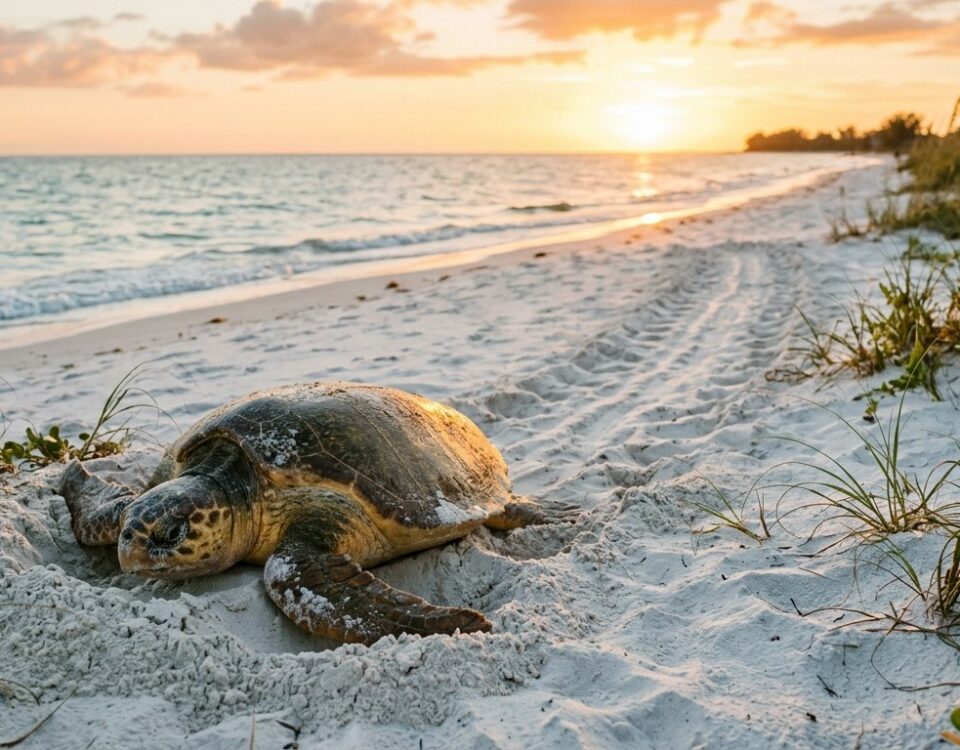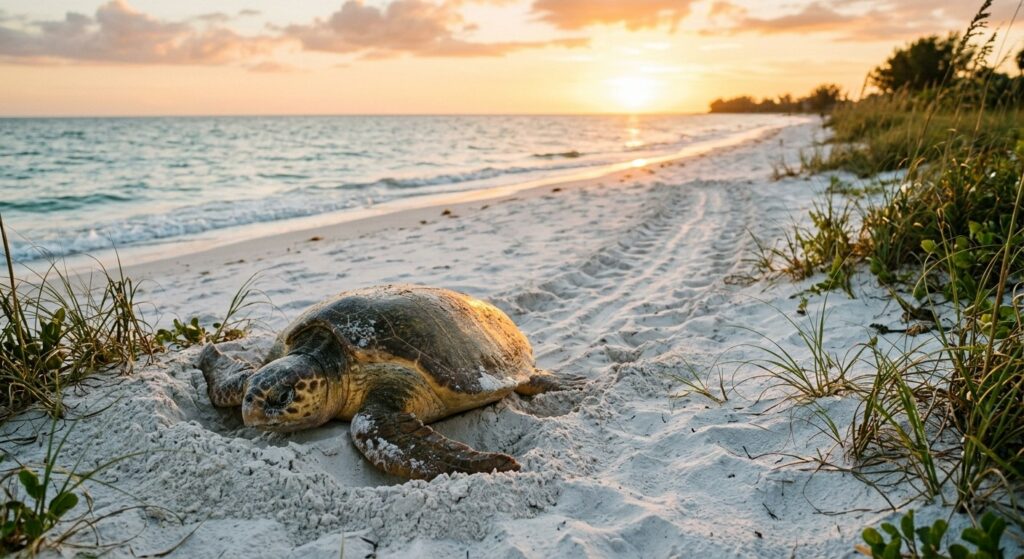
Loggerhead sea turtles nest on Anna Maria Island from May 1 through October 31. The rules that protect them apply to every visitor, rental property, and stretch of beach on the island.
Many first-time visitors arrive without realizing how active the conservation effort is during nesting season. Understanding the guidelines before you unpack helps your vacation stay relaxed and respectful. It also helps the community preserve that experience for everyone.
Sea Turtles Are Important to the AMI Community
Anna Maria Island takes sea turtle conservation seriously, and visitors quickly notice how involved the community is in protecting nesting activity. Volunteer patrol teams walk the beaches before sunrise each morning, checking for new nests and monitoring hatch activity throughout the season.
Sea turtles navigate at night using moonlight reflecting off the Gulf. Bright artificial lighting from beachfront homes, restaurants, and nearby properties can distract hatchlings and nesting turtles. That makes it harder for them to find the water.
To protect the turtles, Anna Maria Island enforces its beach lighting ordinance during nesting season. Exterior fixtures visible from the beach are expected to use warm-spectrum lighting such as amber or red bulbs.
Beach Gear Left Overnight Creates a Hazard for Nesting Turtles
One of the easiest ways to support turtle season is also one of the simplest habits to follow. Beach chairs, umbrellas, canopies, wagons, and shade tents left on the sand overnight can block nesting turtles and hatchlings as they move toward the Gulf.
The rule is simple: if you carry it onto the beach, bring it back before dark.
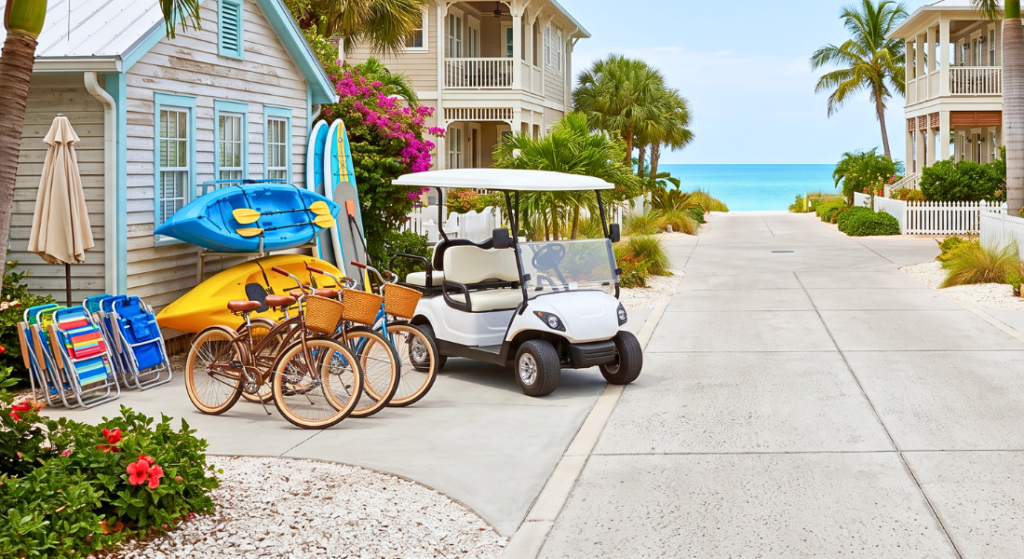
Most rental companies make storage easy by delivering equipment directly to your vacation home, so cleanup only takes a few minutes at the end of the day. Making beach pickup part of your evening routine helps keep the shoreline clear and ready for overnight nesting activity.
Identifying Marked Turtle Nests on AMI
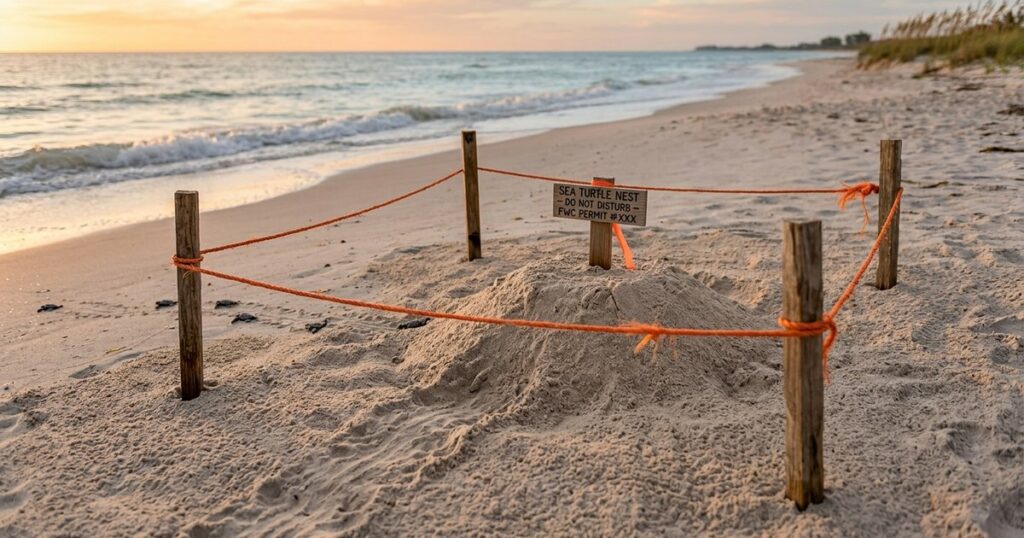
When volunteers locate a nest, the area is clearly marked with wooden stakes, red ribbon, and a data tag showing the lay date and estimated hatch window. Visitors are expected to stay at least six feet away from the perimeter.
The marked nests are easy to spot from a distance. If you see one while walking the beach, give it space, point it out to your children, and enjoy the chance to see active conservation work happening in real time.
Volunteer patrols monitor hatch windows closely throughout the season. Watching hatchlings make their way toward the Gulf is one of the most memorable experiences many families have on Anna Maria Island. The team at Anna Maria Island Turtle Watch and Shorebird Monitoring can often provide updates on nests expected to hatch during your visit.
“Watching dozens of hatchlings scramble toward the Gulf is the kind of moment that does not leave you. If you want to be there when eggs hatch, contact the Anna Maria Island Turtle Watch and Shorebird Monitoring organization. They track hatch timelines and can let you know when a nest is close. It is worth planning around.” – Duane Gartman, Fun and More Rentals, Anna Maria Island
Your Rental Home’s Lights Might Affect Nesting Turtles
This is the piece that surprises most families. The turtle light ordinance does not stop at the beach. It covers any property within sight of the water.
If the rental home you are staying in sits close to the Gulf, the exterior lights on the beach-facing side must use warm-spectrum bulbs. Bright white exterior lighting on the Gulf side of a rental property is one of the most cited violations during nesting season.
Most well-managed properties on Anna Maria Island have already made the switch. But it is worth checking when you arrive. If you notice bright white exterior bulbs on the beach-facing side of the home, mention it to your property manager before code enforcement does.
Inside your unit, keep bright lights away from Gulf-facing windows after dark. Closing the blinds and curtains on that side takes about thirty seconds and makes a real difference for hatchlings trying to find the water.
Under Florida Fish and Wildlife Conservation Commission guidelines, sea turtle-friendly lighting is defined by wavelength, intensity, and shielding. Anna Maria Island’s lighting rules closely follow those state recommendations.
Turtle Season Enforcement on Anna Maria Island
The volunteer patrol is made up of residents and conservation supporters who walk the beaches before sunrise every day during nesting season. They track nests, monitor hatch activity, and help visitors understand how to protect the island’s wildlife while enjoying the beach responsibly.
Families visiting Anna Maria Island often connect with the conservation effort quickly, especially children. Seeing marked nests, learning why lights matter, and helping to clean the beach before sunset make turtle season a meaningful part of the vacation experience.
Not sure which beach gear is easiest to transport and store overnight? Talk to the team at Fun and More Rentals before your trip. We deliver beach equipment directly to your rental home, making setup and end-of-day cleanup simple throughout your stay.
Turtle Season FAQs for Anna Maria Island Visitors
When does turtle nesting season start and end on Anna Maria Island?
Turtle nesting season on Anna Maria Island runs from May 1 through October 31. During this period, loggerhead sea turtles nest along the Gulf and bay sides of the island. The rules protecting nesting activity are enforced throughout the entire season.
What beach items must be removed from the sand before dark?
All gear must be off the sand before dark. That includes chairs, umbrellas, canopies, pop-up shade tents, beach wagons, and any other equipment. Items left overnight obstruct nesting turtles and are flagged by the morning volunteer patrol, which results in fines.
How close can I get to a marked turtle nest?
Visitors must stay at least six feet away from any staked and ribboned nest. The markers are easy to spot from a distance. Children and pets should be kept clear of the perimeter. The stakes and red ribbon are visible well before you are close enough to cause a problem.
What should I do if a turtle is nesting or in distress on the beach?
Do not approach, touch, or use lights or camera flash near a nesting turtle. Keep a respectful distance and stay quiet. If you see a turtle that appears injured or stranded, report it to the Florida Fish and Wildlife Conservation Commission through their Wildlife Alert Hotline. Do not attempt to move or assist the animal yourself.
Is it illegal to touch a sea turtle in Florida?
Yes. Loggerhead sea turtles are protected under the federal Endangered Species Act and Florida state law. Touching, harassing, or disturbing a sea turtle or its nest carries serious federal and state penalties. This applies to both nesting adults and hatchlings.
How do I find out when a nest is about to hatch?
Contact the Anna Maria Island Turtle Watch and Shorebird Monitoring organization during your stay. They track hatch timelines throughout the season and can let you know when a nest is approaching its window. Planning a morning or evening around a hatch is one of the more memorable things you can do on the island.
Are there other wildlife rules I should know about on Anna Maria Island?
Yes. Shorebirds nesting in the dunes are also protected during spring and summer. Marked bird nesting areas carry the same stay-clear expectations as turtle nests.
Plan your Family Beach Trip During Turtle Season
Fun and More Rentals helps families enjoy Anna Maria Island while keeping beach days simple during nesting season. From chairs and umbrellas to wagons and beach gear delivery, everything arrives directly at your vacation rental.
Connect with our team before your trip to reserve your beach equipment and enjoy a smoother beach experience from day one.
Duane Gartman is the owner of Fun And More Rentals, the largest vacation equipment rental company on Anna Maria Island. With nearly 20 years in business, Duane started with just two bicycles and built a fleet that now serves thousands of families each year. Fun And More Rentals is known for its free delivery and pickup service, Best Price Guarantee, and a focus on making island vacations effortless from arrival to departure.